
Choosing the right instrument for electrochemical measurements
Application, current/voltage requirement, EIS, number of channels and expansion: a step-by-step selection guide.
1. Define your application
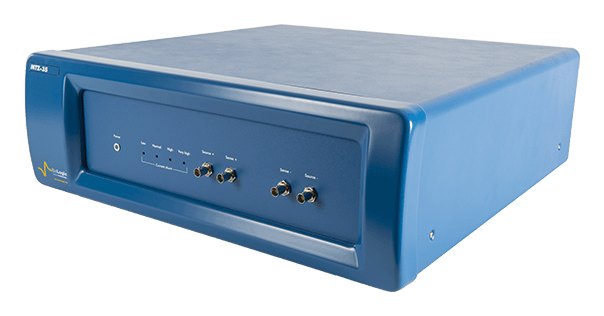
Corrosion and sensor studies call for low-current accuracy (ULC); batteries/supercapacitors and fuel cells for high current and booster compatibility; materials characterization for a wide frequency range (MTZ-35, 35 MHz). Our Applications pages provide validated product matches for each field.
2. Current and voltage
The standard ±10 V / ±1 A (Essential) is sufficient for most laboratory experiments; the voltage is adjustable to [-20; +20] V. For higher currents, internal booster boards (Premium: up to 150 A), external boosters (2–100 A), the HCV-3048 (30 A/48 V) or FlexP (800 A / 60 V) are added.
3. EIS and speed
If EIS is required, the upper frequency limit (1 MHz Essential, 11 MHz Premium) and the quality indicators are decisive. Fast kinetics require the Premium bandwidth (8 MHz) and ARG (1 µs).
4. Channels and the future
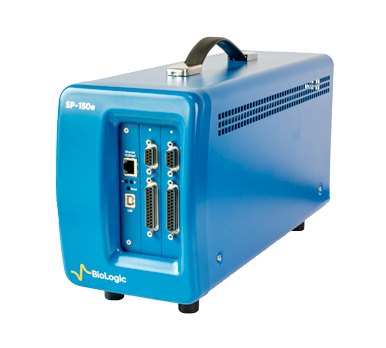
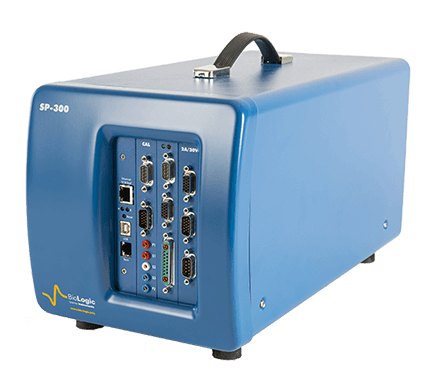
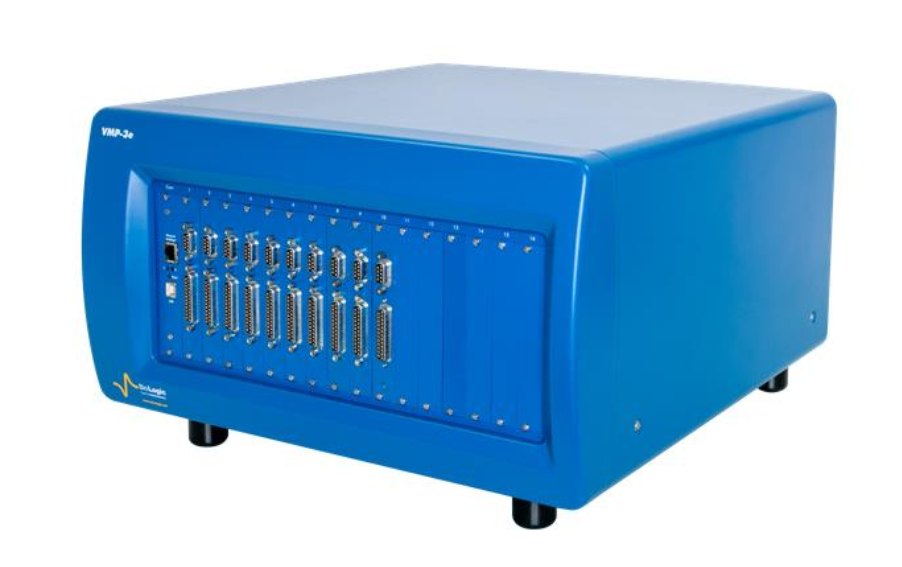
From a single channel (SP-50e/SP-200) to 16 channels (VMP-3e/VMP-300); modular chassis allow channels and boosters to be added later. When in doubt, our technical team recommends a configuration for your application.
Sources: Bio-Logic 2026 product catalogue and product brochures; general electrochemistry literature. This content is for information; consult our technical team for instrument selection.