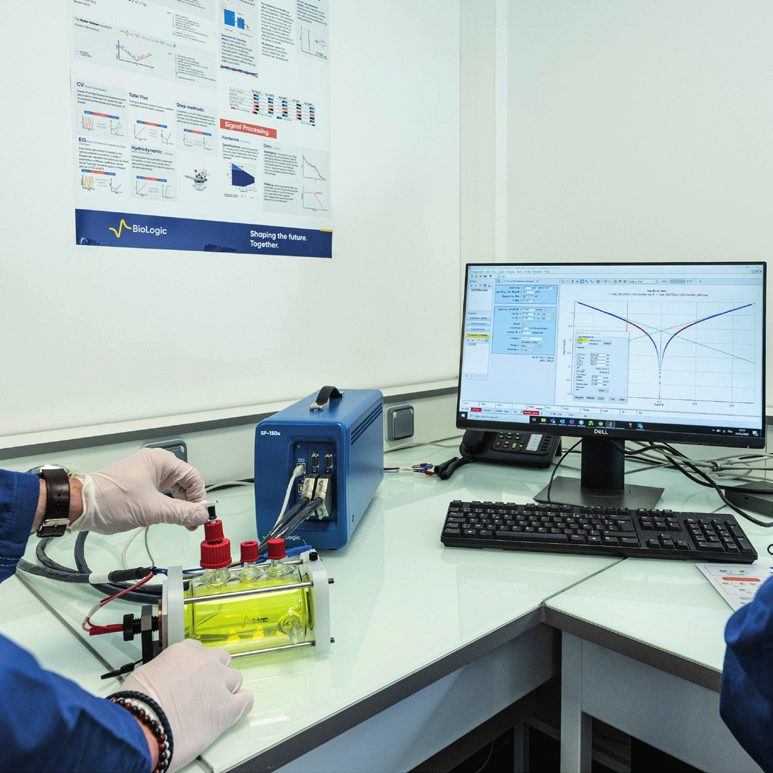
Fundamentals6 min read
What is a potentiostat and how does it work?
Three-electrode cell, control amplifier and current measurement: the operating principle of the potentiostat/galvanostat and the criteria for choosing one.
 Bio-Logic Science Instruments — Authorized Distributor for Türkiye

Knowledge Library, technical articles, guides, glossary and frequently asked questions. Content has been checked for scientific accuracy; links to manufacturer documents are on the product pages.
12 modules, 28 lessons: from the fundamentals of electrochemistry to EIS, batteries, corrosion, fuel cells, materials and scanning probe techniques; peer-reviewed sources and measurement instruments under every lesson.
Question-and-answer guides compiled from more than 100 application notes and organised by topic: which measurement is done how, and with which instrument?
Three-electrode cell, control amplifier and current measurement: the operating principle of the potentiostat/galvanostat and the criteria for choosing one.

Small-amplitude AC excitation, Nyquist/Bode representation, equivalent-circuit modelling and the three indicators that validate measurement quality.
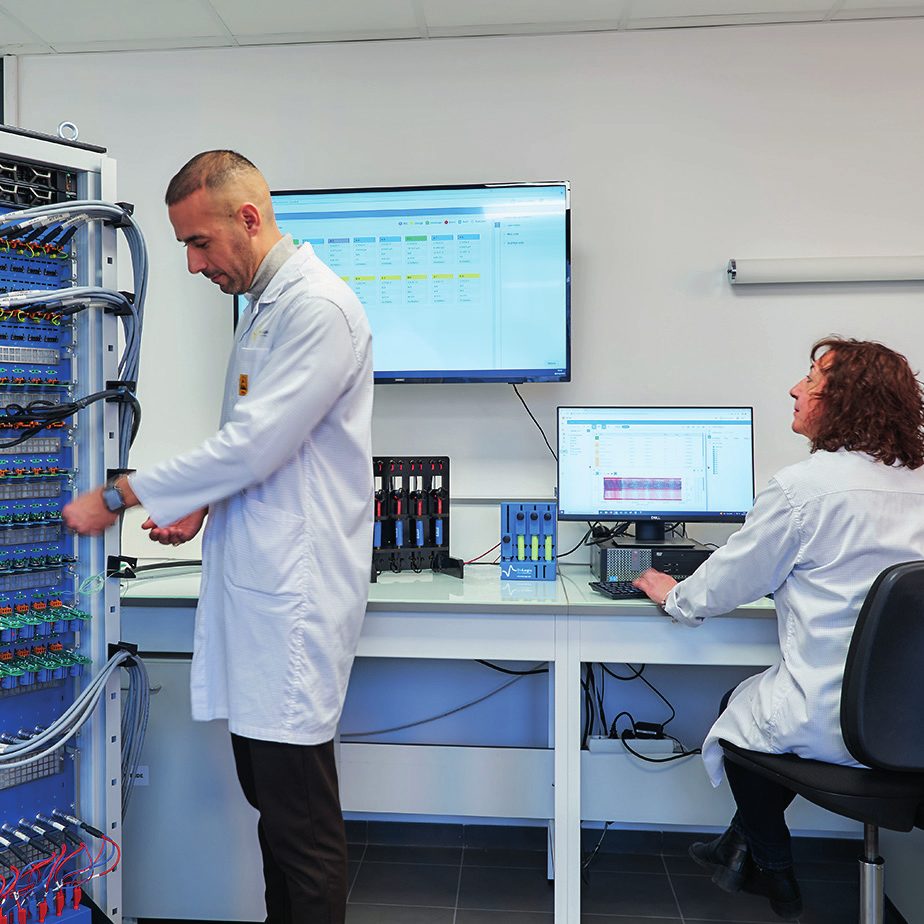
Cell format, current/voltage range, number of channels, native EIS and data security: the criteria that determine the right cycling system.
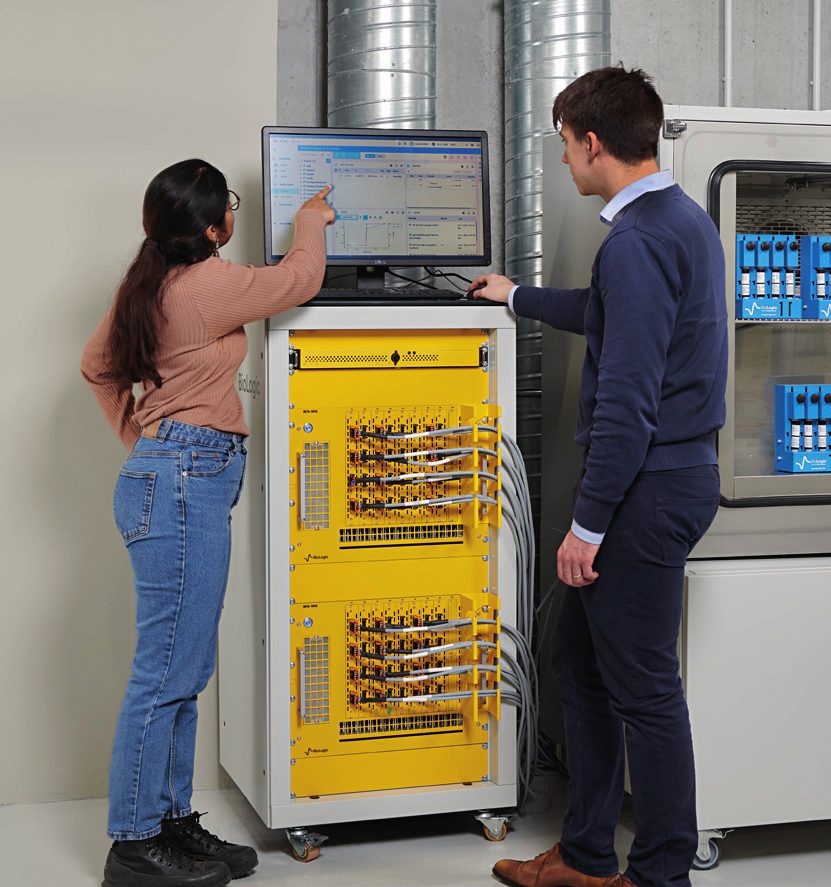
The balance between statistical significance, test duration and budget: how many channels do you need?

Cyclic voltammetry versus chronoamperometry: when to use which, and what information each provides.

Application, current/voltage requirement, EIS, number of channels and expansion: a step-by-step selection guide.
Bio-Logic brochures and technical documents can be downloaded from the "Documentation" section of the relevant product pages.
Go to productsCurrent software versions, manuals and tutorial videos are provided through the manufacturer's official user portal, mybiologic.net.
my.biologic.netThe Bio-Logic Learning Center contains a large number of articles, application notes and videos.
biologic.net/topics