
Why the number of channels matters in battery research
The balance between statistical significance, test duration and budget: how many channels do you need?
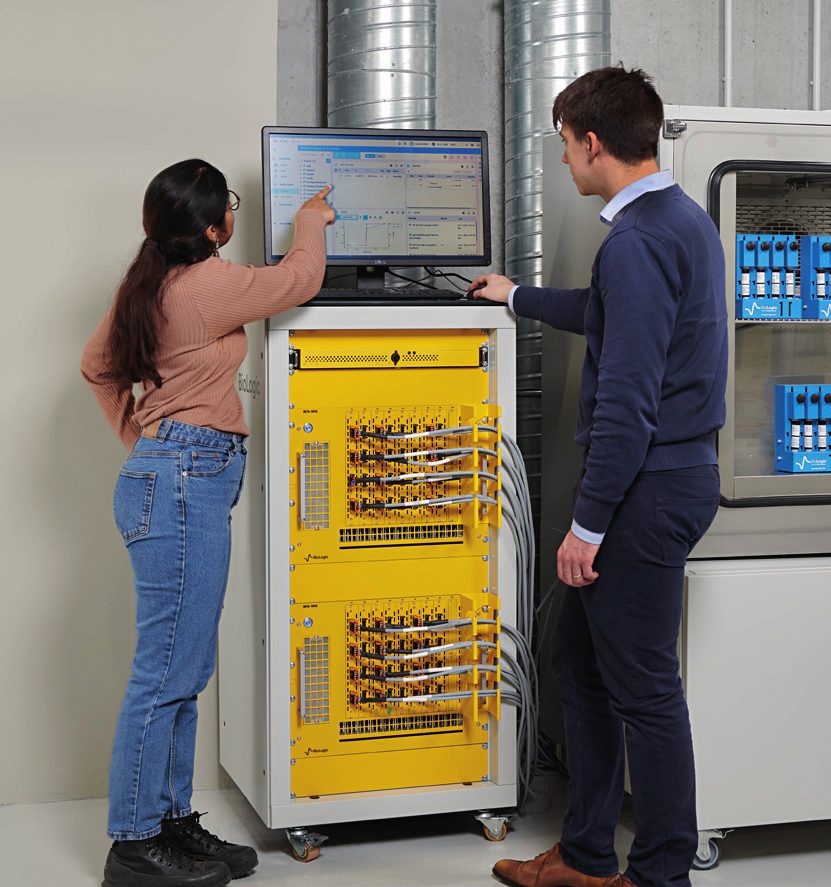
Battery cycling tests take weeks, sometimes months. Because of cell-to-cell variability, drawing conclusions from a single cell is misleading; at least 3–5 replicates per condition, multiplied by different C-rates and temperatures, quickly call for dozens of channels.
Modular growth
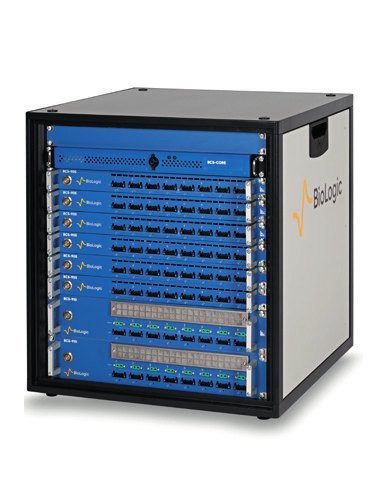
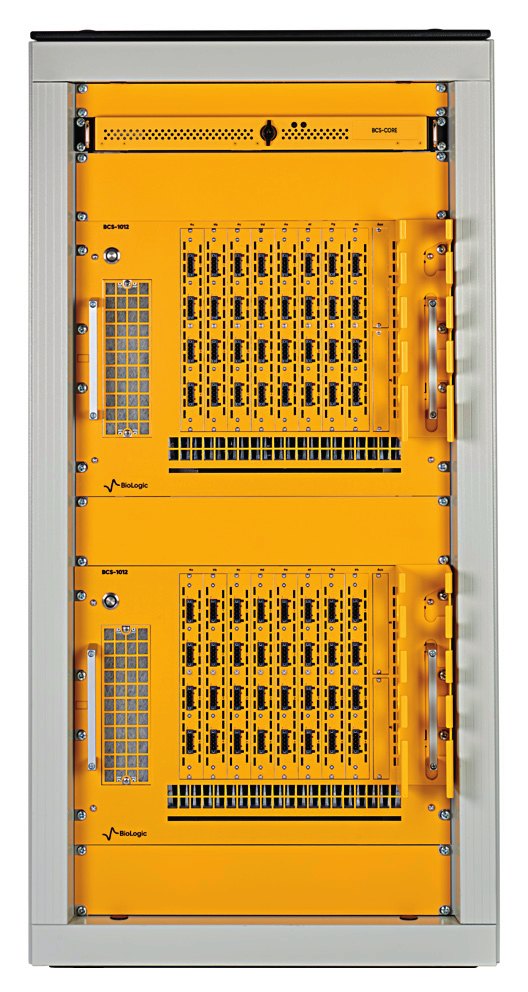
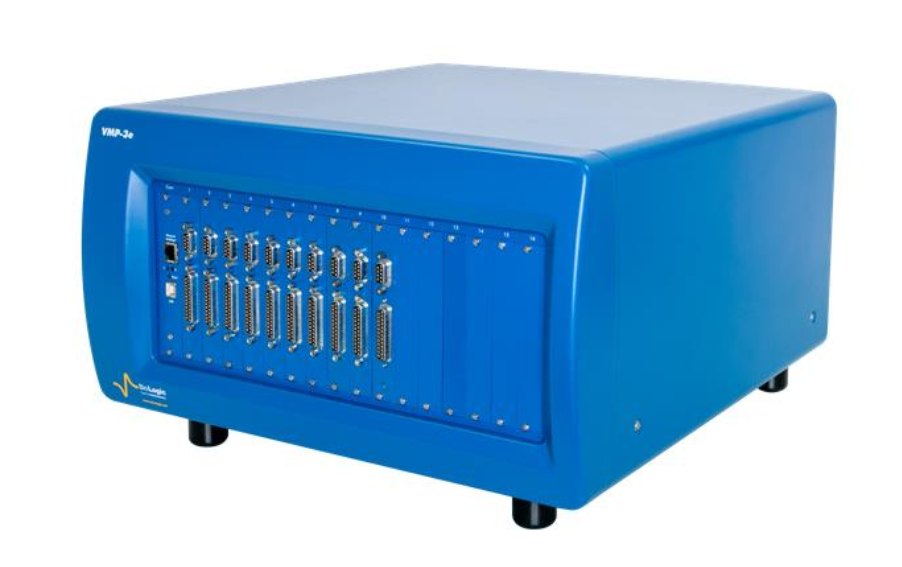
The BCS-900 series grows with 8-channel modules (1U/2U/4U) in cabinets from 6U to 38U; BCS-905, 910 and 915 modules can be mixed in the same cabinet and added without stopping running tests. The BCS-1012 provides high density with 32 channels in 8U. On the potentiostat side, the VMP-3e and VMP-300 offer up to 16 independent channels.
Channel-to-channel consistency
As the number of channels grows, low channel-to-channel standard deviation and automatic calibration (BCS-CAL: 8 channels in 20 minutes, NIST-traceable certificate) keep results comparable.
Sources: Bio-Logic 2026 product catalogue and product brochures; general electrochemistry literature. This content is for information; consult our technical team for instrument selection.