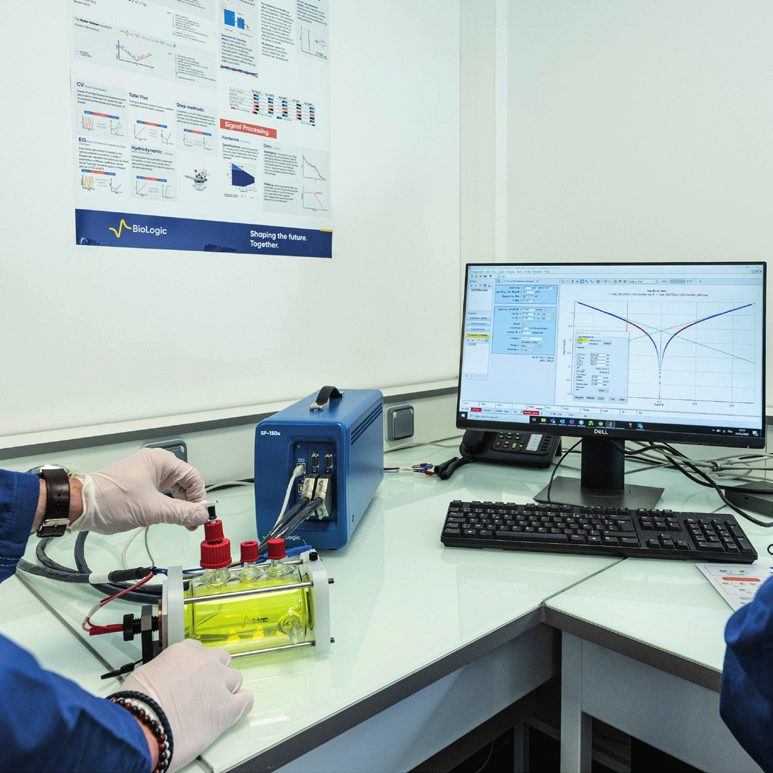
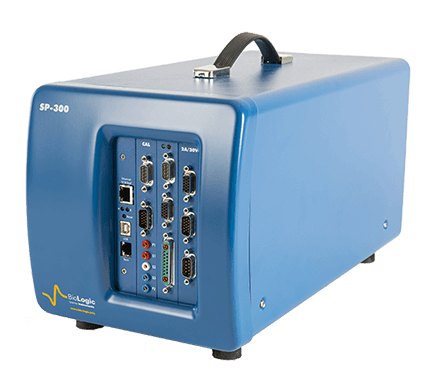
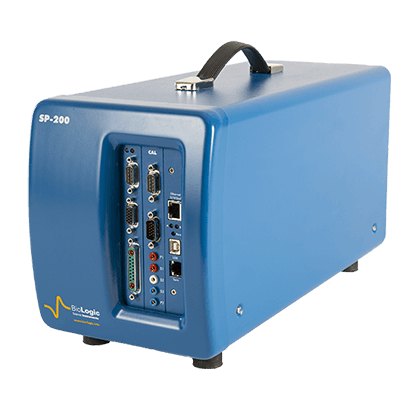
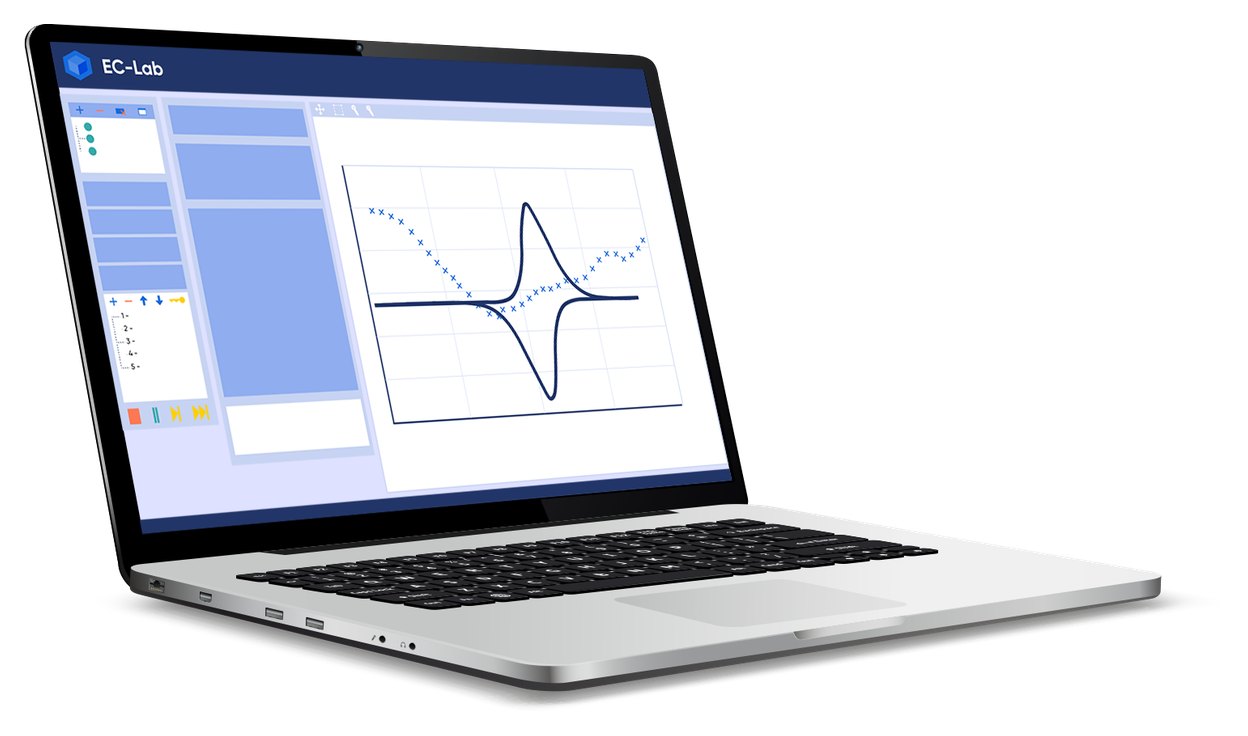
Potentiostat stability: why does oscillation occur, how is the bandwidth chosen?
Effect of the control loop, cell capacitance and cable effects on stability; when to change the bandwidth (stability) setting in EC-Lab®.
Sections of the note: Introduction · POTENTIOSTAT, BASIC PRINCIPLES · WHERE ARE THOSE OSCILLATIONS COMING FROM ? · PRACTICAL SITUATIONS · THE BANDWIDTH PARAMETER · STABILITY CRITERION FOR A CAPACITIVE CELL
Current model: The SP-150 has been replaced by the SP-150e.
Current model: The SP-50 has been replaced by the SP-50e.
Current model: The VMP2 has been discontinued; its current counterpart is the VMP-3e.
Current model: The VMP3 has been discontinued; its current counterpart is the 16-channel VMP-3e.
Current model: The VSP is still available in the Essential range; for energy applications the VSP-3e is recommended.
Corrosion – Application Note 27
Ohmic drop 1: How does IR drop affect measurements?
Effect of solution resistance and electrode position on CV, Tafel and EIS; estimating the magnitude of the ohmic drop.
Sections of the note: Introduction · Steady-State Conditions · Voltammetry · Tafel Plot · Another Example · Impedance Measurements
Battery – Application Note 28
Ohmic drop 2: Which techniques measure IR drop?
Comparison of current interrupt (CI), EIS (ZIR) and positive feedback methods; EC-Lab® application.
Sections of the note: Introduction · EIS Measurement · Current Interrupt Method · Battery Analysis · EIS Measurements · Current Interrupt Method
Battery – Application Note 29
Ohmic drop 3: How are ZIR techniques used correctly?
Automatic compensation of the resistance measured with ZIR, percentage setting and over-compensation risks; manual and EIS-based compensation.
Sections of the note: Introduction · ZIR techniques · High frequency equivalent circuit of an electrochemical impedance · Equivalent circuit of an electro-chemical impedance · High frequency equivalent circuit of an electrochemical faradaic impedance · RΩ measurement in the simplest case