

What is a battery cycler and what should be considered when choosing one?
A cycler works on the same principle as a potentiostat/galvanostat, but its aim is ageing and lifetime estimation through long-term charge/discharge. A selection guide based on experimental, analytical and safety/support criteria.
Key points
- Principle: applying current and measuring voltage (galvanostatic) or the reverse (potentiostatic); AC measurement with an impedance option. Continuous charge/discharge gives capacity, internal resistance (current interrupt or impedance) and degradation information.
- Because experiments can last months, an architecture of independent multiple channels speeds up the workflow. The current range must suit the cell, module or pack: BCS-905 ±150 mA (coin cells), BCS-910 ±1.5 A (R&D and pilot lines), BCS-915 ±15 A.
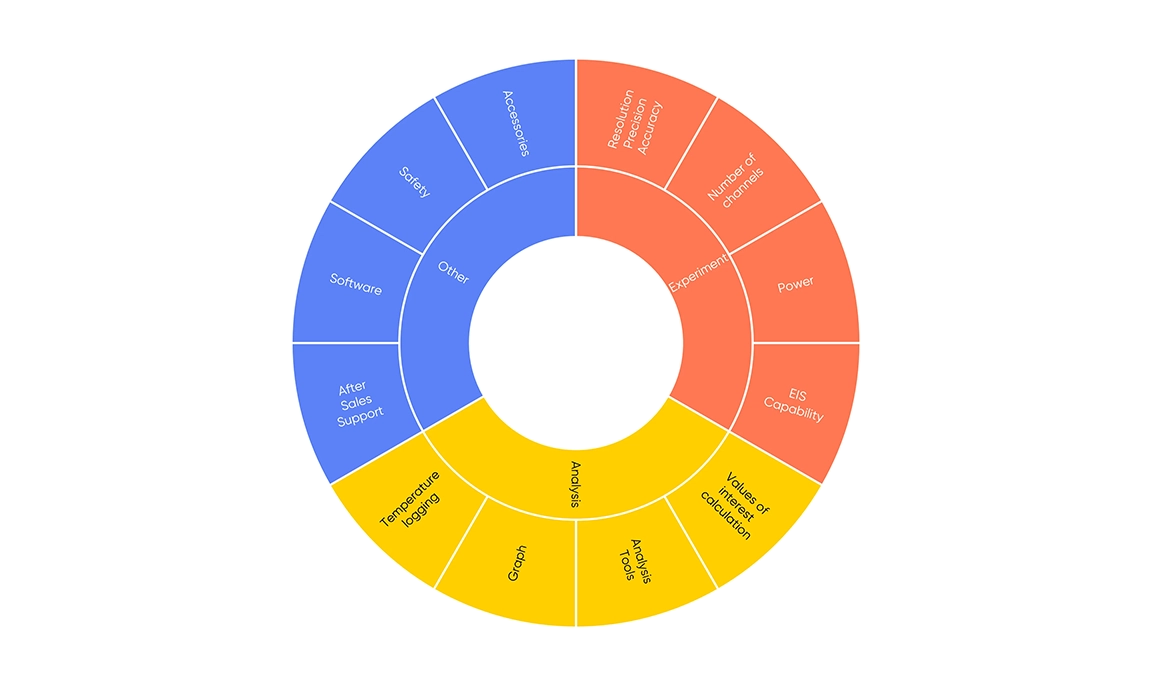
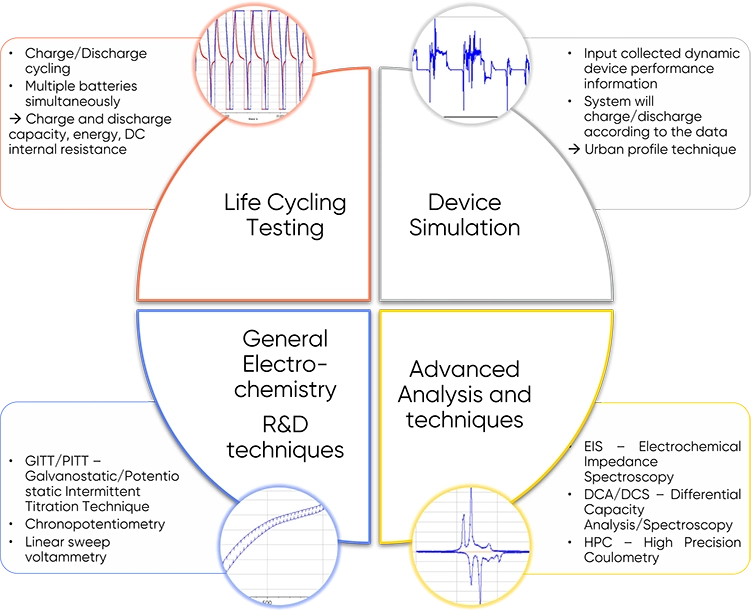
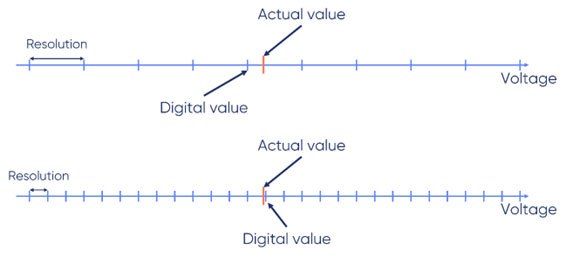
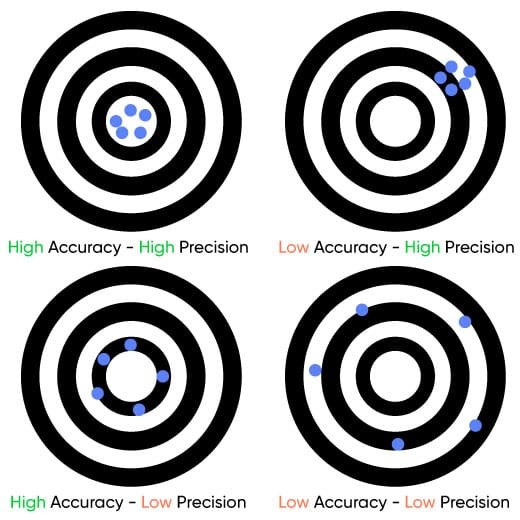
- User profiles: life-cycle testing, device simulation (real usage profiles), general R&D techniques (GITT/PITT, chronopotentiometry, LSV) and advanced analysis (EIS, DCA/DCS, HPC). For R&D, resolution, precision and accuracy must be considered together.
- EIS: a simultaneous EIS option on each channel in the MPG series (10 µHz - 100 kHz) and a sequential EIS option in the BCS series.
- Analysis: values such as charge and power are calculated in hardware every 1 ms; only the selected sampling is sent to the software. Running experiments, graphs and analysis in the same software (EC-Lab, BT-Lab) allows analysis while the experiment runs. Temperature logging: PT100 on MPG, K-type thermocouples on BCS.
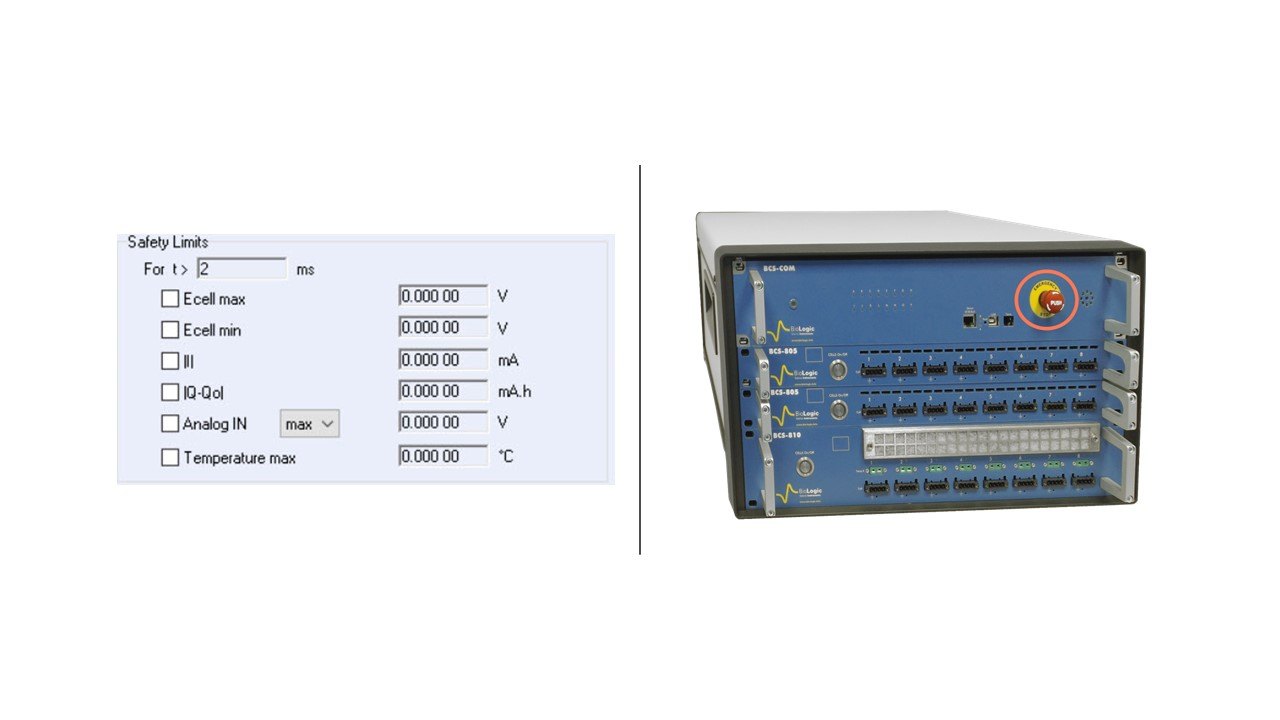
- Safety and support: voltage, current, charge and temperature safety limits, an emergency stop that opens all circuits, low maintenance and strong technical support.
Figures
Images: Bio-Logic Science Instruments; taken from the source article.
Videos
Related application notes
- How are precision and accuracy ensured in Coulombic-efficiency measurement (HPC)? Battery AN53
- How are intercalation electrodes studied with GITT and GCPL? Battery AN1
- How are degradation mechanisms tracked with dQ/dV (differential capacity) analysis? Battery AN40
- How is the ohmic (internal) resistance of a battery measured with EIS? Battery AN62
Related curriculum module: Battery Testing and Characterisation
Related products:BCS-900 Series (BCS-905 / 910 / 915)MPG-200 Series (MPG-2 / MPG-205)BT-Lab® SuiteEC-Lab®
Source: Bio-Logic Learning Center, “What is a battery cycler?” · Source updated: June 6, 2025
Copyright of the images and the original text belongs to Bio-Logic SAS.
Copyright of the images and the original text belongs to Bio-Logic SAS.