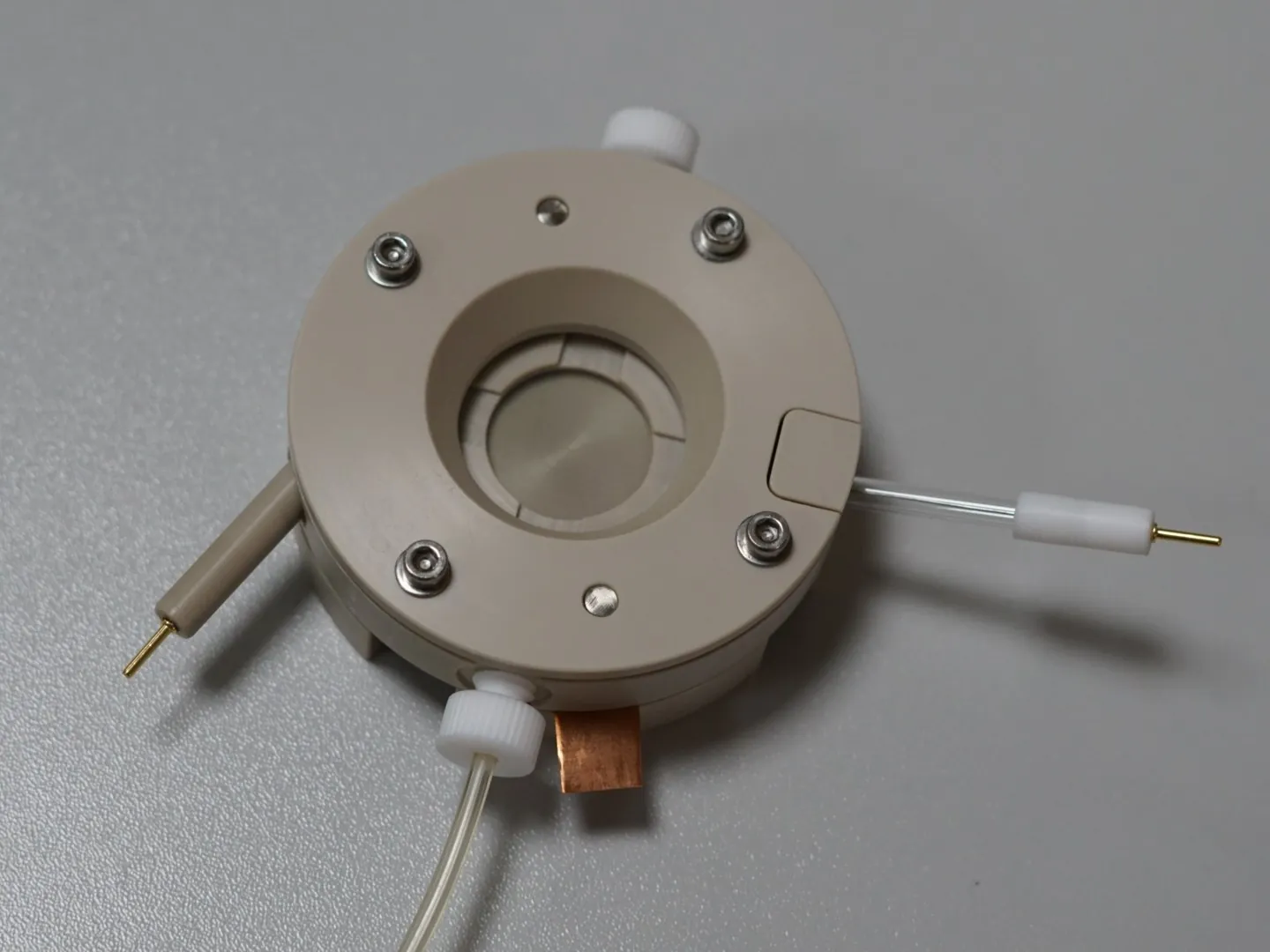
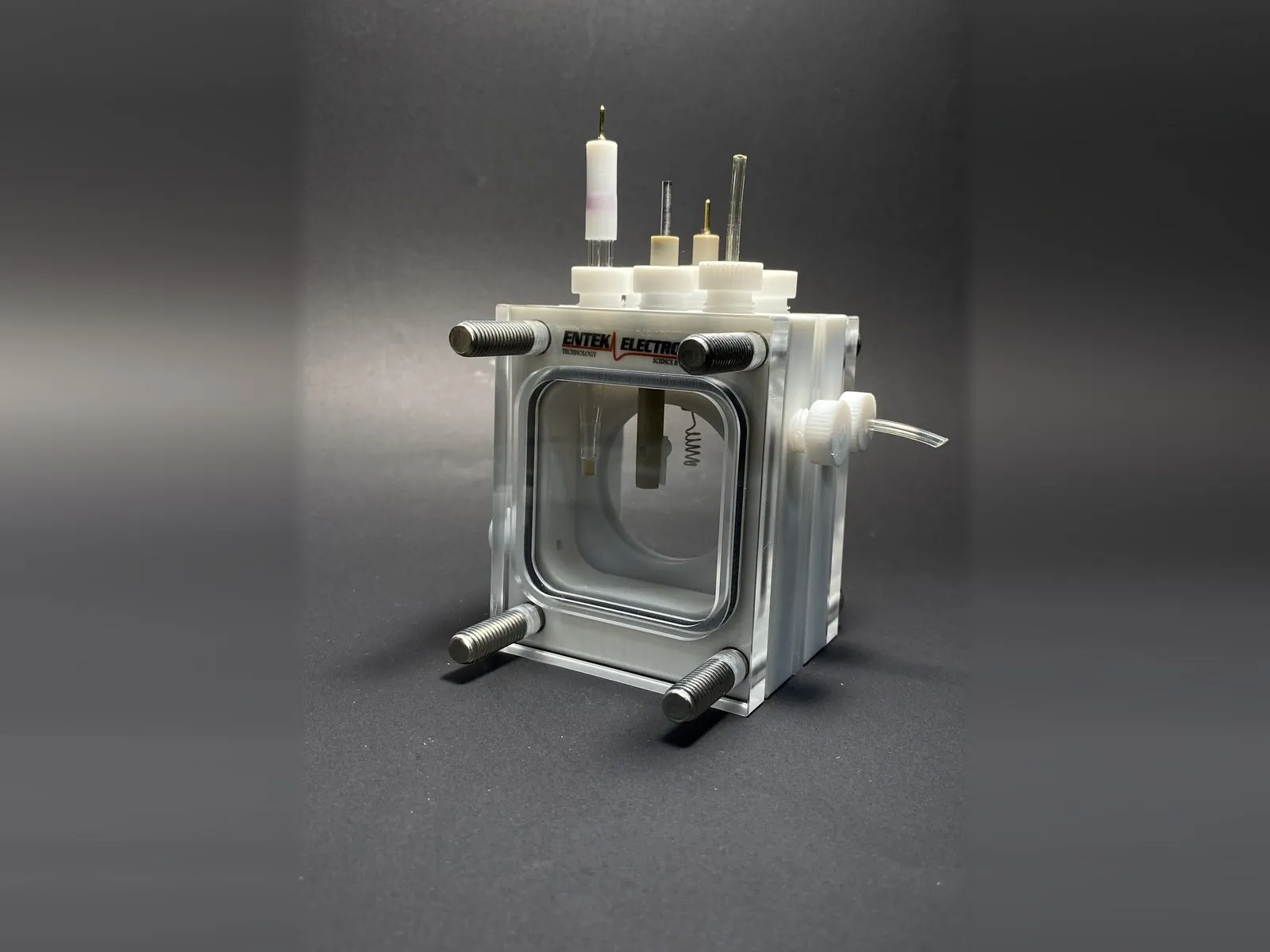
The Raman cell is designed for recording the Raman spectrum of an electrode surface while the electrochemical measurement is running (in situ spectroelectrochemistry). The flat sample, which is the working electrode, sits face-up on the cell base, and the laser and objective of the Raman microscope reach the surface from above. The low, flat body is designed to sit on the microscope stage.
The sample is contacted from below with a copper strip. The top flange is tightened with four screws and sealed with an O-ring, so only the area under the opening is in contact with the electrolyte. The reference electrode enters from the side and the counter electrode is fitted with an insulated body. Tubing connections with PTFE fittings can be used for electrolyte exchange or gas purging.
Bodies have been made in beige and grey. Sample size, exposed area, optical window and the distance between sample and objective are set to suit your Raman microscope and objective. Typical work: following intermediates in electrocatalysis, battery electrode surfaces, corrosion and passive film formation, SERS measurements.